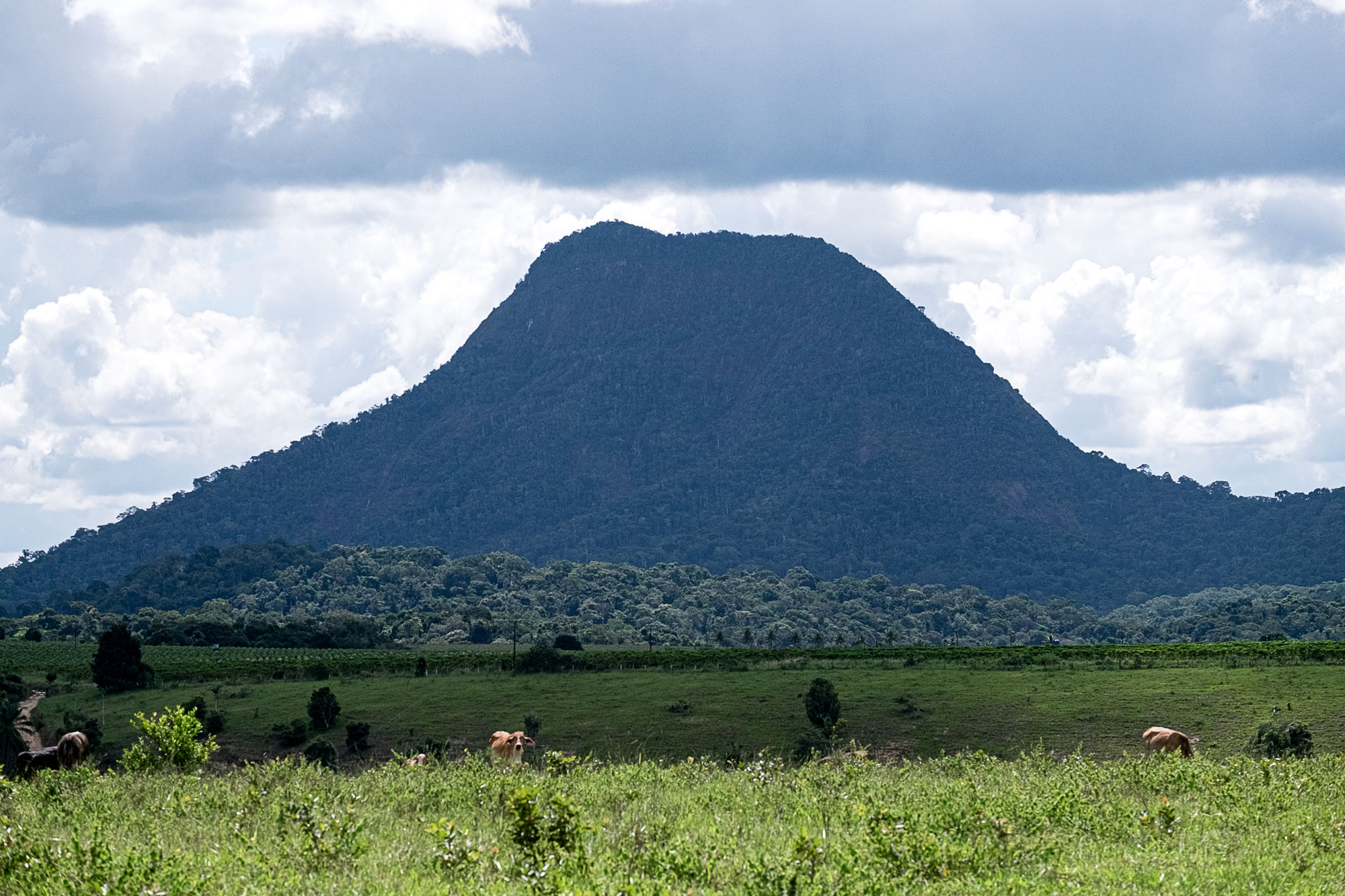
When the Portuguese reached the coast of Brazil for the first time at Easter on April 22, 1500, the striking mountain with it's lush vegetation was among the first landmarks they spotted from the sea. Because of the date, they named it "Easter Mountain" – Monte Pascoal.

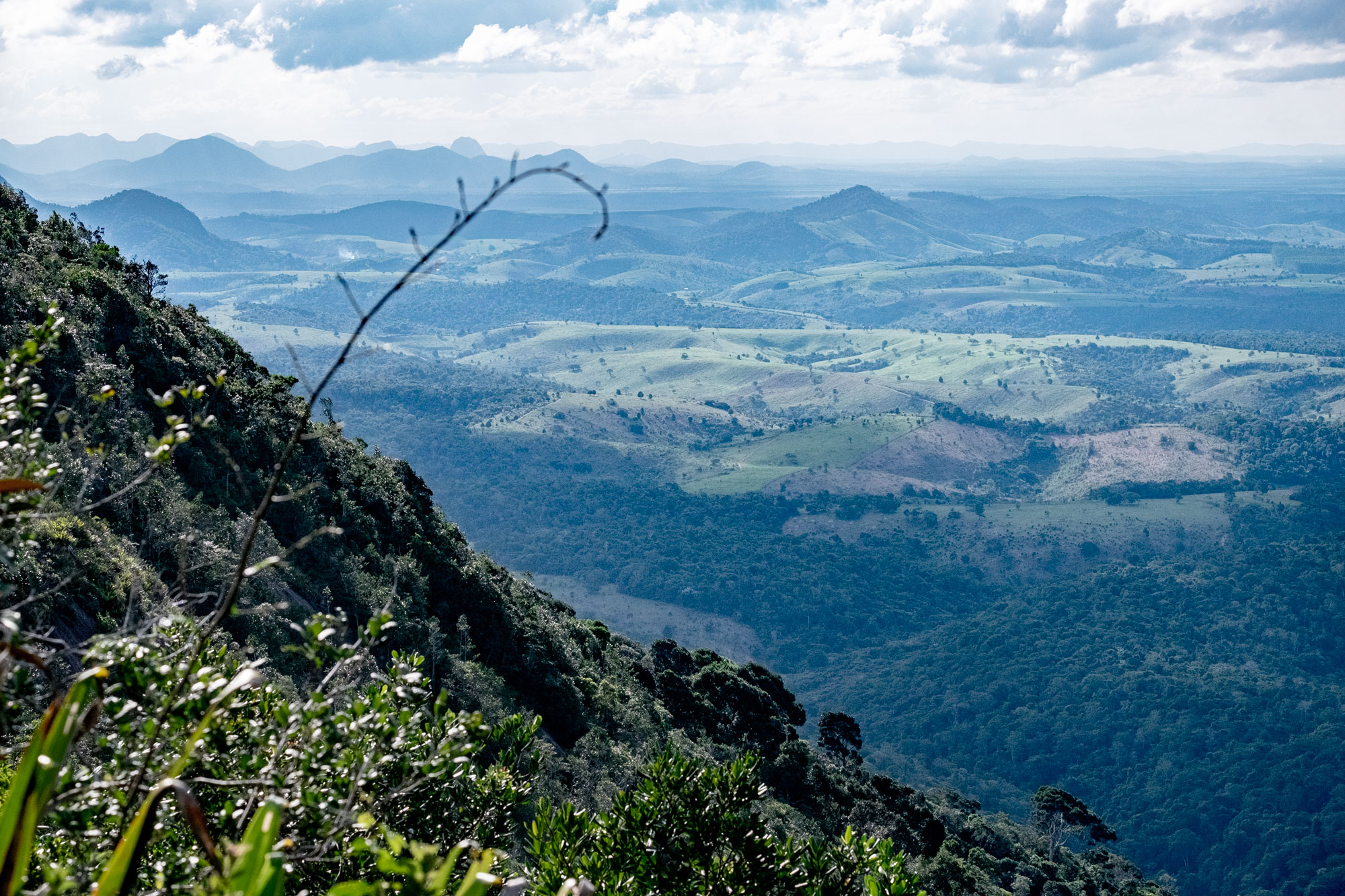
Located in the south of the state of Bahia, the area had been inhabited by indigenous people for a much longer time. Also, a large part of their ancestors fell victim to colonialism. The following generations are fighting until today to maintain their traditions and unique ways of life and to protect the forest. Only a small part of the Atlantic Forest surrounding the mountain remains.
Between the coast and the mountain, today grasslands with grazing cattle and coffee plantations dominate. Eucalyptus forests are grown for timber and are increasingly pushing back the living rainforest.
To protect the area the Monte Pascoal National Park was created in 1961 with a size of about 22,332 hectares. It consists of dense rainforest and various mosaic-like ecosystems, such as swamps and mangrove forests, that connect the rainforest on the mountain with the coast. The national park has been a UNESCO cultural heritage site since 1999 and is one of the most important protected areas of the Atlantic Rainforest, which originally extended over large parts of the east coast of Brazil and of which only around 5-10% remain today. Despite it's small size, it is home to many rare plants and animals, such as the jaguar, and has one of the highest biodiversities on our planet.
At the foot of the mountain is the Pataxó settlement of Aldeia Pé do Monte with the visitor center founded in 1999, from where you can climb the mountain in an approximately 3-hour hike for a fee and be accompanied by an indigenous guide.
During a technically easy but still quite steep climb to a height of 536 meters, you can enjoy the magnificent view of the distant Monte Alto, the national park, and the coast. The Pataxó see themselves as protectors of nature, and the forest is indigenous land. In the village of Aldeia Pé do Monte, there are projects that deal with reforestation, the protection of the Atlantic forest, and ethnotourism. By passing on and explaining the indigenous culture, prejudices are broken down, and the knowledge of the Pataxó is conveyed to visitors and younger generations.
To visit the park and Monte Pascoal, follow the BR101 and then turn onto the BR498. After 14 km, you reach the visitor center and the entrance to the park via asphalted roads.
Source: (2024, April 8th). In Wikipedia. https://de.wikipedia.org/wiki/Monte_Pascoal; https://en.wikipedia.org/wiki/Monte_Pascoal_National_Park; https://brasil.mongabay.com/2020/03/monte-pascoal-caciques-pataxo-pedem-socorro-para-a-floresta-no-sul-da-bahia; https://www.nationalgeographicbrasil.com/meio-ambiente/2019/03/guias-pataxos-turismo-bahia-parque-nacionalmonte-pascoal; https://pataxoturismo.com.br/passeios-alternativos/monte-pascoal